Building your medical CV is just as important as getting good marks for your final matric national senior certificate. When applying for jobs within the medical field, a curriculum vitae is requested as it represents your professional experience.
So what experience does one have when they have completed their two year medical internship and community service? You are now an independent medical practitioner together with many other doctors around the country competing for very limited spaces in fields of interests be it, medical officer posts, a registrar post or a clinical researcher post. There is no better time to start your creating your CV than within the six years you spend as an undergraduate student.
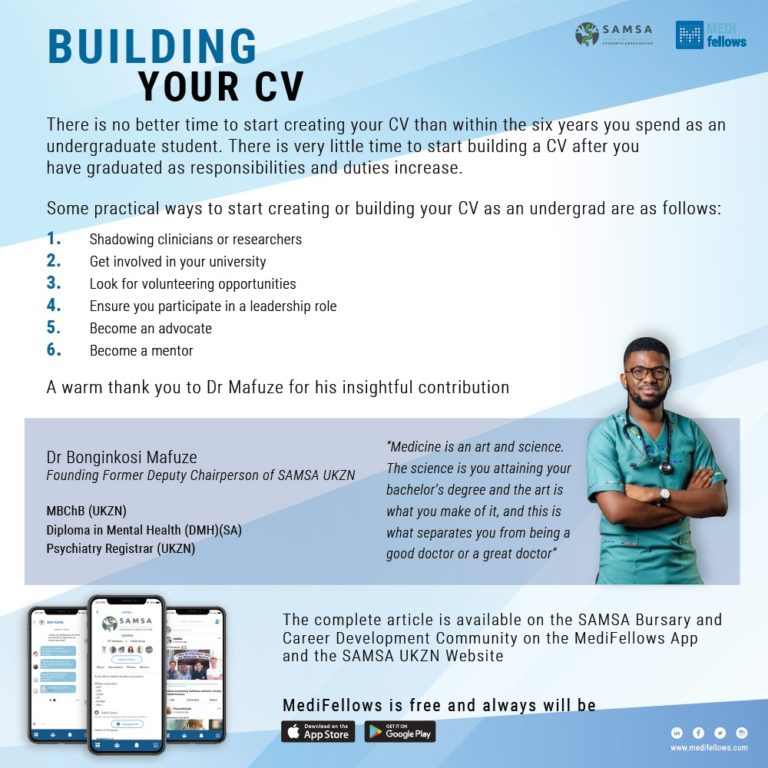
Medicine is an art and science. The science is you attaining your bachelor’s degree and the art is what you make of it and this is what separates you from being a good doctor or a great doctor. During the undergrad year you get exposed to many different things and you are still young and have the energy to be involved. There is very little time to start building a CV after you have graduated as responsibilities and duties increase.
Medical school can be very challenging and you end up being caught within its whirlwind and forget to live to your greatest potential. No one knows you better than yourself, so you need to ask yourself very important questions at an early part of your undergraduate years. What is it that you hope to achieve? What is it that you enjoy or like and have a passion for? And what impact or difference do you want to offer?
Some practical ways to start creating or building your CV as an undergrad are as follows:
You need to create your own opportunities when building up your CV. The participation in extra-curricular activities is usually accompanied by honors and awards which are useful achievements in your CV. It is important to think outside the box, or think like there is no box at all and not limit yourself to routine. Medicine is really more the art than the science in most everyday practices.